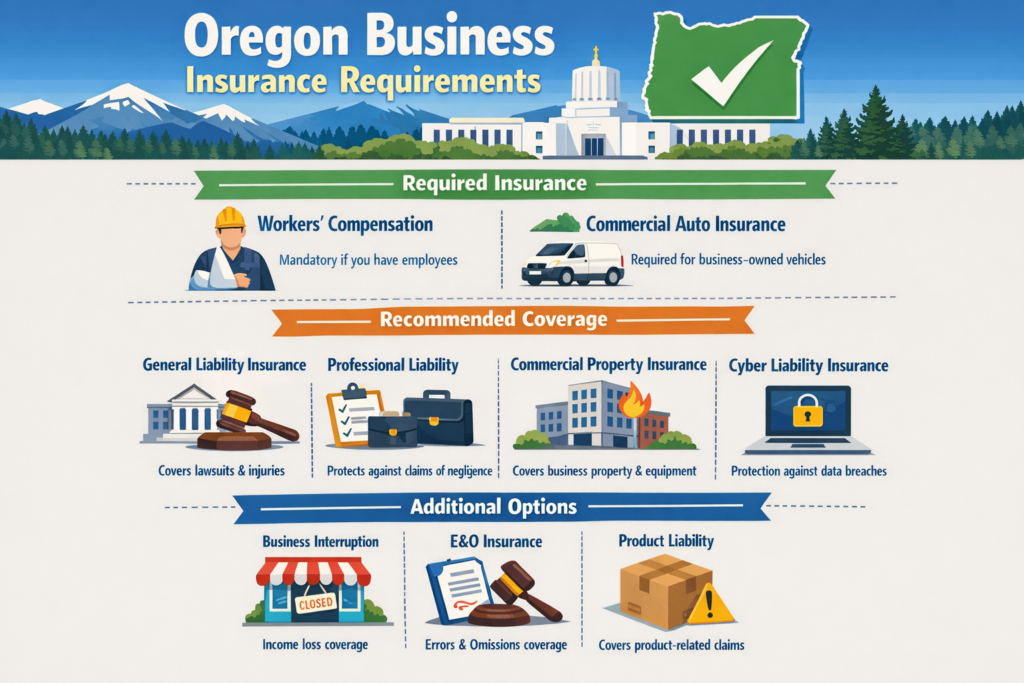
Operating a business in Oregon involves a range of responsibilities, including compliance with the state’s insurance requirements. Understanding which types of business insurance are mandatory and the consequences of noncompliance is essential for every business. This article offers a comprehensive overview of Oregon business insurance requirements. The specific policies businesses must carry, and the potential penalties for noncompliance.
Understanding Oregon Business Insurance Requirements Laws
Oregon law makes it clear that certain types of insurance are not optional for businesses. The state requires employers to ensure their operations are adequately covered to protect employees, customers, and the general public. These regulations help to minimize risks associated with workplace injuries, property damage, and liability claim. Creating a safer environment for everyone involved.
The main drivers behind these laws are public and employee protection. For example, workers’ compensation insurance ensures that employees who are injured on the job receive medical benefits and wage replacement. Without such protections, injured workers may have limited recourse, and employers could face costly lawsuits.
Understanding and adhering to Oregon’s mandatory business insurance laws is crucial. Not only does compliance keep your business in good standing with state authorities, , It also demonstrates professionalism and builds trust with your employees and customers. Failing to do so could result in significant financial and legal consequences, as outlined in subsequent sections.
Key Types of Insurance Required for Oregon Businesses
The most widely required type of insurance in Oregon is workers’ compensation insurance. Any business with one or more employees, whether they are full-time or part-time, must carry this coverage. It provides medical and wage benefits to employees who experience work-related injuries or illnesses. Certain exceptions exist, such as for sole proprietors with no employees, but the majority of businesses must comply.
Another essential policy is commercial auto insurance. If your business owns or operates vehicles for work purposes, Oregon law mandates that you maintain a minimum level of liability coverage. This requirement applies regardless of whether the car is used to transport goods, equipment, or employees. The state sets minimum coverage limits that must be adhered to to remain compliant.
While not always legally required, general liability insurance and professional liability insurance are highly recommended for businesses in Oregon. Some industries or local jurisdictions may mandate these coverage, especially for contractors, healthcare professionals, or those in specialized fields. Having these additional policies not only helps meet specific regulatory requirements but also offers crucial protection against lawsuits and claims.
Penalties for Noncompliance With Oregon Insurance Rules
Failure to comply with Oregon’s mandatory business insurance requirements can result in severe penalties. For instance, operating without workers’ compensation insurance may result in hefty fines, legal action by injured employees, and potential business closure. The Oregon Workers’ Compensation Division actively monitors compliance and can impose penalties ranging from daily fines to criminal charges in extreme cases.
If a business fails to maintain required commercial auto insurance, the state may suspend vehicle registrations, impose additional fines, or even seize company vehicles. Additionally, any accidents involving uninsured business vehicles can result in the business being held personally liable for damages. Which can be financially devastating.
Beyond direct legal penalties, noncompliance damages a business’s reputation and can result in the loss of contracts, customers, and future opportunities. Clients and partners may be hesitant to engage with a company that fails to meet basic legal obligations, underscoring the importance of Oregon businesses prioritizing insurance compliance.
Conclusion
Ensuring your business is fully compliant with Oregon’s insurance requirements is not just a legal necessity it’s a smart business move. By understanding the state’s mandatory insurance laws, securing the right policies, and staying vigilant about compliance, you safeguard your business. Taking these proactive steps provides peace of mind and sets the foundation for sustainable growth in Oregon’s dynamic business environment.